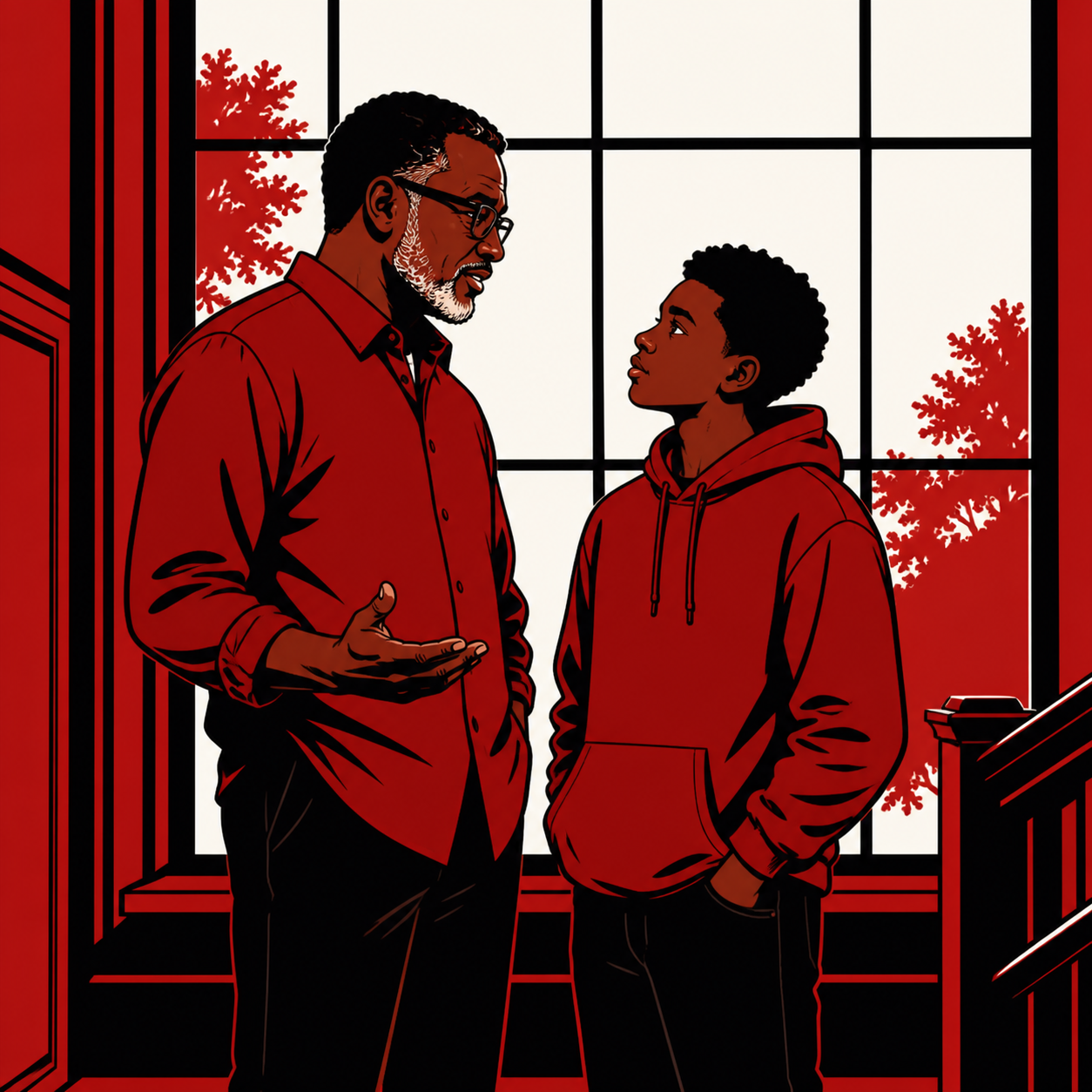
My Father’s Words Series
My father said a lot of things that stayed with me. Some of them I understood immediately. Some of them I had to grow into. And some of them hit me like a ton of bricks in the moment, even when I couldn’t fully explain why.
This was one of the second kind.
I don’t remember what I had done. I honestly can’t recall the specifics — whatever it was has long since faded. What hasn’t faded is what he said in response.
“Your word is all that you have. Once you lose it, you don’t have anything.”
I was young enough that the words stung before I understood them. That’s usually how you know something is true — it lands before your brain has time to argue with it.
Think about a credit rating for a moment.
You don’t build credit in a day. It accumulates slowly, over time, through a hundred small transactions that most people barely notice. Pay on time. Follow through. Do what you said you were going to do. Nobody throws you a parade for it. It’s just expected. But miss a payment, default on something, let your obligations slide — and the damage shows up fast. And it follows you. Lenders remember. Systems remember. People remember.
Your word works exactly the same way.
Every time you do what you said you were going to do, you’re making a deposit. Small, quiet, unannounced. But over time those deposits accumulate into something — a reputation, a track record, a level of trust that people extend to you without even thinking about it. They call you back. They count on you. They vouch for you.
And when you don’t follow through — once, twice, enough times that people start to factor it in — the withdrawal happens just as quietly. Except it costs more than it earned you. A credit score that took years to build can take a single season to damage. So can a reputation.
My father knew this. He lived it. And he wanted me to understand it before I learned it the hard way.
I’ve learned it both ways, honestly.
There’s a version of this that plays out in my marriage. My wife told me she wasn’t going to a family event. I took her at her word — no follow-up, no double-checking, no asking again. About two weeks passed between that conversation and the event. I believed what she said and I acted accordingly.
I went. And it landed me in hot water.
Now here’s the part worth sitting with: I wasn’t wrong to believe her. Taking someone at their word is what you’re supposed to do. That’s the whole premise. But what I learned in that moment is that keeping your word is one thing, and navigating the complexity of human communication is another. Sometimes what people say and what they mean aren’t perfectly aligned. Sometimes context shifts. Two weeks is enough time for a decision to quietly change without an announcement.
My father’s lesson was about my integrity — about the kind of man I needed to be with my word. But life added a footnote: you’re also responsible for reading the room, knowing your person, and not treating a commitment like a legal document when the situation calls for more attention than that.
Both things are true. Keep your word. And pay attention.
I’ve thought about what he said for decades now. He’s been gone since 2002, so I’ve had a lot of years to sit with it.
What I’ve come to believe is that it’s not just about honesty in the obvious sense — don’t lie, don’t break promises. It goes deeper than that. Your word is the foundation of how people experience you. It shapes whether they trust you with important things or keep you at arm’s length. It determines whether you show up in people’s lives as someone dependable or someone who means well.
You can have talent, intelligence, ambition, resources. But if people can’t count on what you say — if your yes means maybe and your definitely means we’ll see — none of the rest of it carries the weight it should.
My father said it in one sentence. He meant it for a lifetime.
“Your word is all that you have. Once you lose it, you don’t have anything.”
He was right. It stung because it was true. And I’ve spent the years since then trying to make sure I keep it.
Leave a Reply