“Even half-asleep they had such faith in the world that had made them — tilting through the water, unruffled, sure.” — Mary Oliver, on egrets
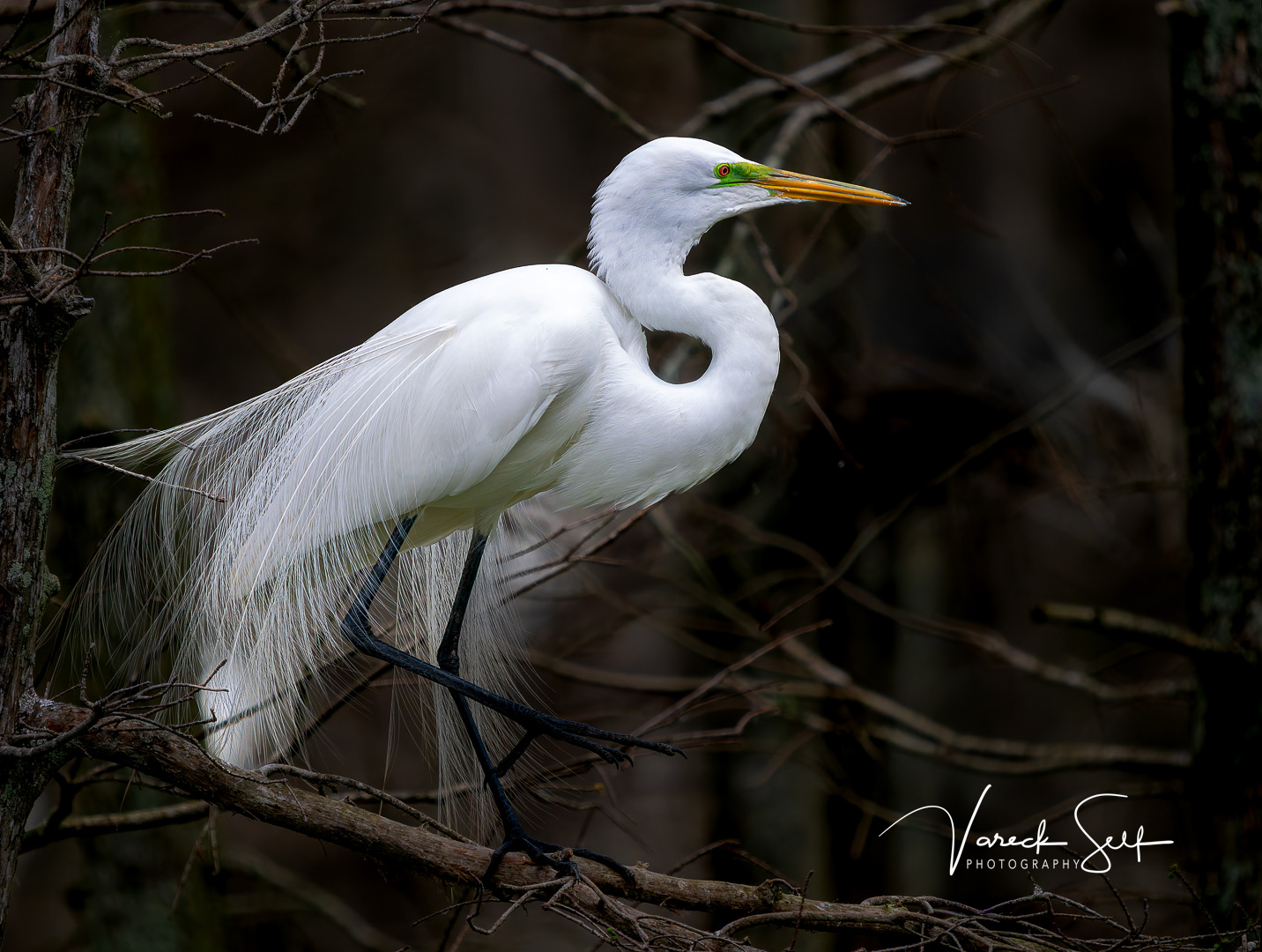
The Great Egret almost didn’t make it. In the late 1800s, these birds were hunted by the tens of thousands for their breeding plumes — the same long feathers you can see trailing off this bird’s back. The slaughter was so severe it helped spark the entire American conservation movement and eventually led to the founding of the Audubon Society. That’s a lot of history on a single branch.
What you’re seeing here is a bird in its full breeding condition. The yellow-orange bill, the flowing aigrettes, and that bright green patch of skin around the eye — called the lores — only look like this for a few weeks each year. Outside of breeding season, the lores go back to yellow and the plumes fade. The red eye is easy to miss in the field but hard to ignore once you know to look for it.
Great Egrets are waders by trade, but they’re just as comfortable in the trees. This one had picked a spot in the canopy and settled in, which made for a completely different portrait than the usual shallow-water shots you see of this species.
Leave a Reply